• The escalation of the conflict in the Middle East is driving oil prices higher.
• Brent’s rally is heightening the risk of accelerating inflation and forcing the Fed to raise interest rates.
The US dollar has soared to two-week highs thanks to strong macroeconomic data, ‘hawkish’ comments from FOMC officials, rising Treasury yields and higher oil prices. The greenback is benefiting from its status as a safe-haven asset due to the escalation of the conflict in the Middle East. It is being bought as a yield-bearing currency and as the currency of a net exporter of energy commodities.

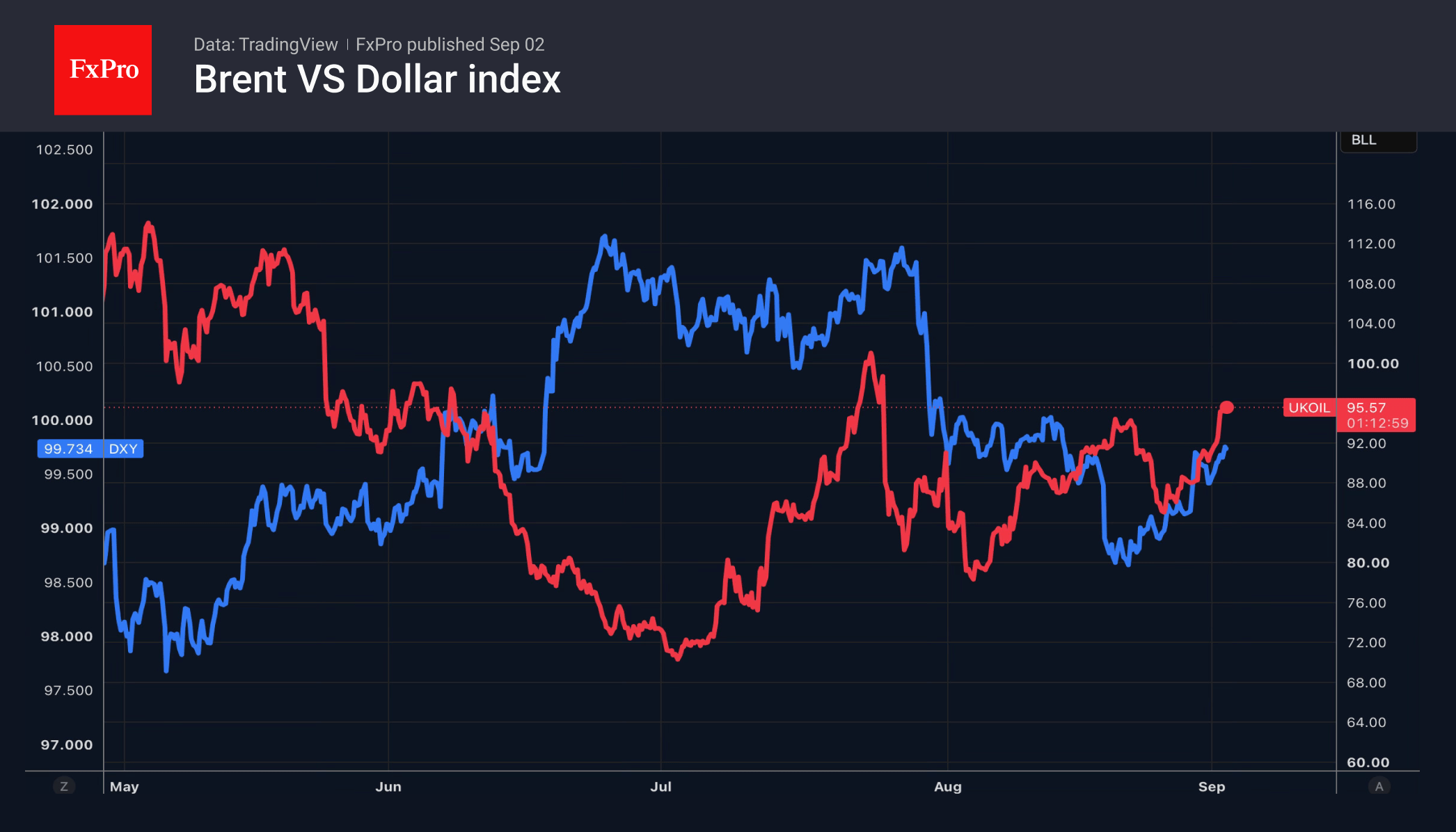
Adding fuel to the USD index rally is the growth in business activity in the manufacturing sector, which has remained above the critical 50 mark for the eighth consecutive month. In August, the Purchasing Managers’ Index (PMI) recorded its second-best result since 2022. FOMC Governor Mark Barr stated that if inflation does not continue to slow in the near future, interest rates should be raised. As a result, the probability of the Fed tightening monetary policy in September has risen to 68%. This has accelerated the rally in yields and strengthened the US dollar.
Expectations of higher inflation and higher central bank interest rates are not the only reasons for the sell-off in the debt market. Treasuries are facing serious competition from hyperscalers raising funds through corporate bond issues. The rise in Brent crude prices is also contributing to the rally in Treasury yields.
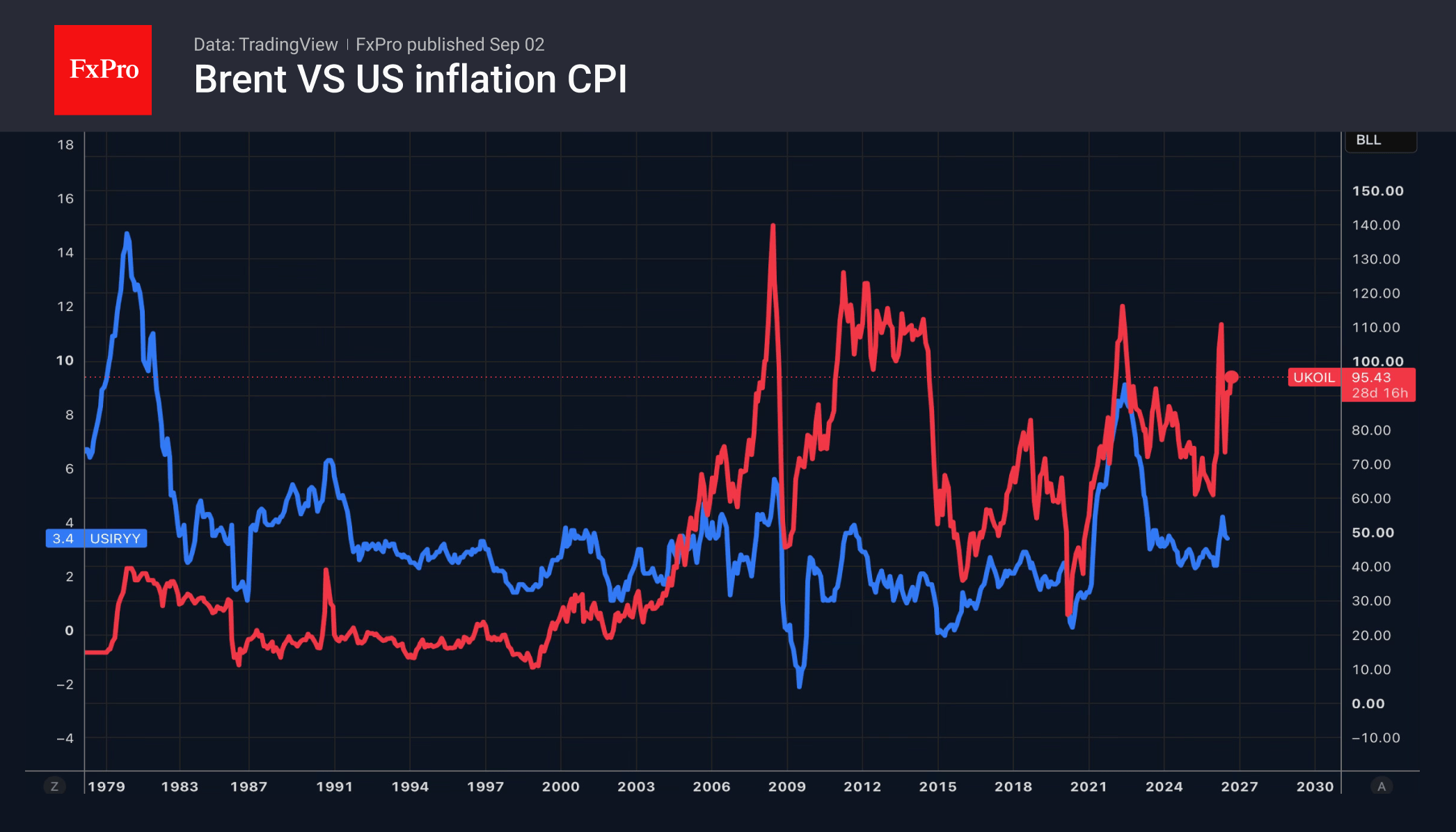
The market is ignoring Donald Trump’s remarks that a great deal of oil passes through the Strait of Hormuz, and Scott Bessent’s statement that in two years, this key global artery will become a worthless stretch of water. Investors are more concerned that the situation is evolving into a protracted and unresolved armed conflict. This is keeping the risk premium on Brent futures high and helping to sustain the rally.
According to the US Department of Energy, around 8 million barrels per day are currently passing through the Strait of Hormuz. A further 4–5 million barrels per day are being transported from the Gulf states via alternative routes.
The higher Brent rises, and the longer North Sea crude remains at high levels, the greater the risk that second-order effects will seep into core inflation. As a result, the Fed will have no choice but to tighten monetary policy. The increasing likelihood of such an outcome in September is pushing up both Treasury bond yields and the US dollar.
The FxPro Analyst Team