A late rally in Chinese shares on Friday helped pull Asian stocks off one-month lows as investors picked bargains while attention shifted to U.S. non-farm payrolls due later in the day. E-Mini futures for S&P 500, which were down 0.5% during early Asian trading, gave up all losses by afternoon to be a shade higher. Futures for Europe were pointing to a weaker start though, with those for Eurostoxx 50, Germany’s Dax and London’s FTSE down 0.3% to 0.6%.
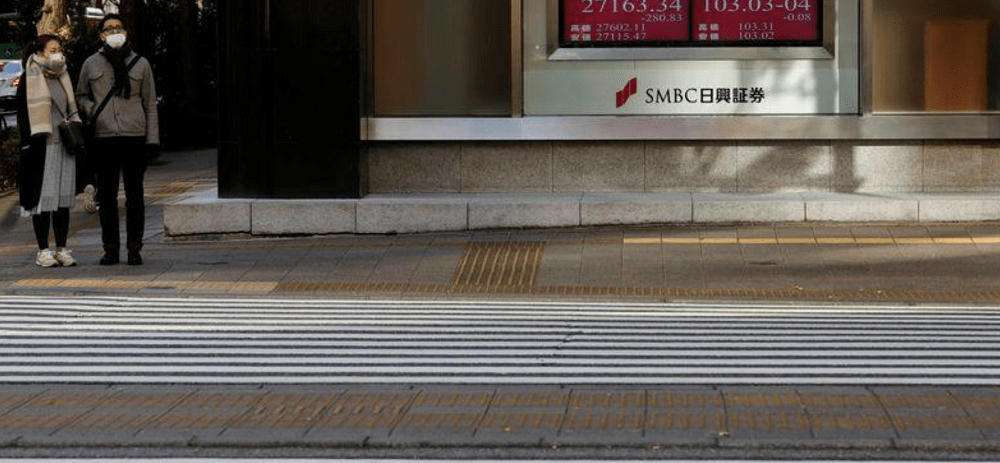
In Asia, Australian stocks dropped more than 0.7%, Japan’s Nikkei share average shed 0.2%, after earlier being down more than 1%, and shares in Seoul fell 0.4%. Chinese shares, which had opened in the red, reversed losses with the bluechip CSI300 index up 0.3%. That left MSCI’s broadest index of Asia-Pacific shares outside of Japan down 0.4% at 694.87 but still above the day’s low of 684.52, a level not seen since Feb. 1.
Earlier, equity investors were rattled by a sell-off in U.S. Treasuries which sent yields rising and hoisted the dollar to a three-month high, dragging the Japanese yen lower. Energy markets were not spared the volatility either, with oil prices adding to big gains overnight after the Organization of Petroleum Exporting Countries (OPEC) and its allies agreed to mostly maintain their supply cuts in April as they await a more solid recovery in demand from the COVID-19 pandemic.
Investor focus turned to the release of the U.S. non-farm payrolls for February, with the market eyeing a bounce back in employment growth and a steady unemployment rate at 6.3%. The tech-heavy Nasdaq Composite tumbled 2.1%, taking it down about 10% from its record close on Feb. 12 and putting it in correction territory.
Bond investors sold U.S. debt. The yield on 10-year Treasuries climbed above 1.5% though it was still below a one-year high of 1.614% struck last week. The yield curve, a measure of economic expectations, steepened on rising yields, with the gap between two- and 10-year yields widening by another 6.3 basis points overnight. Rising Treasury yields bolstered demand for the dollar. The dollar index jumped to a three-month high of 91.734. A stronger dollar hobbled the yen. By early Friday, the yen fell to as low as 108.11, the lowest since June 9. The euro was also tripped by a firmer dollar, with the common currency sluggish at $1.1955. Climbing yields and dollar strength pummeled gold prices, which sank to a nine-month low as investors sold the precious metal to reduce the opportunity cost of holding the non-yielding asset. Spot gold was last at $1,697 per ounce, trading below $1,700 for the first time since June 2020. U.S. crude futures climbed 82 cents to $64.65, holding just below a 13-month high hit on Thursday. Brent crude rose 88 cents to $67.62 a barrel.
Asian shares come off one-month lows; eyes on U.S. payrolls, Reuters, Mar 5