- EURUSD is back at its lows due to unresolved issues in the eurozone.
- The ECB is forced to be more cautious than the Fed.
The US dollar is strengthening thanks to the resumption of the Brent rally and the renewed rise in Treasury yields. This combination is increasing the pressure on the Fed to act. Although investors do not expect a federal funds rate hike this week, the probability of a hike in December stands at 84%, as the relatively strong economy creates scope for such a move.

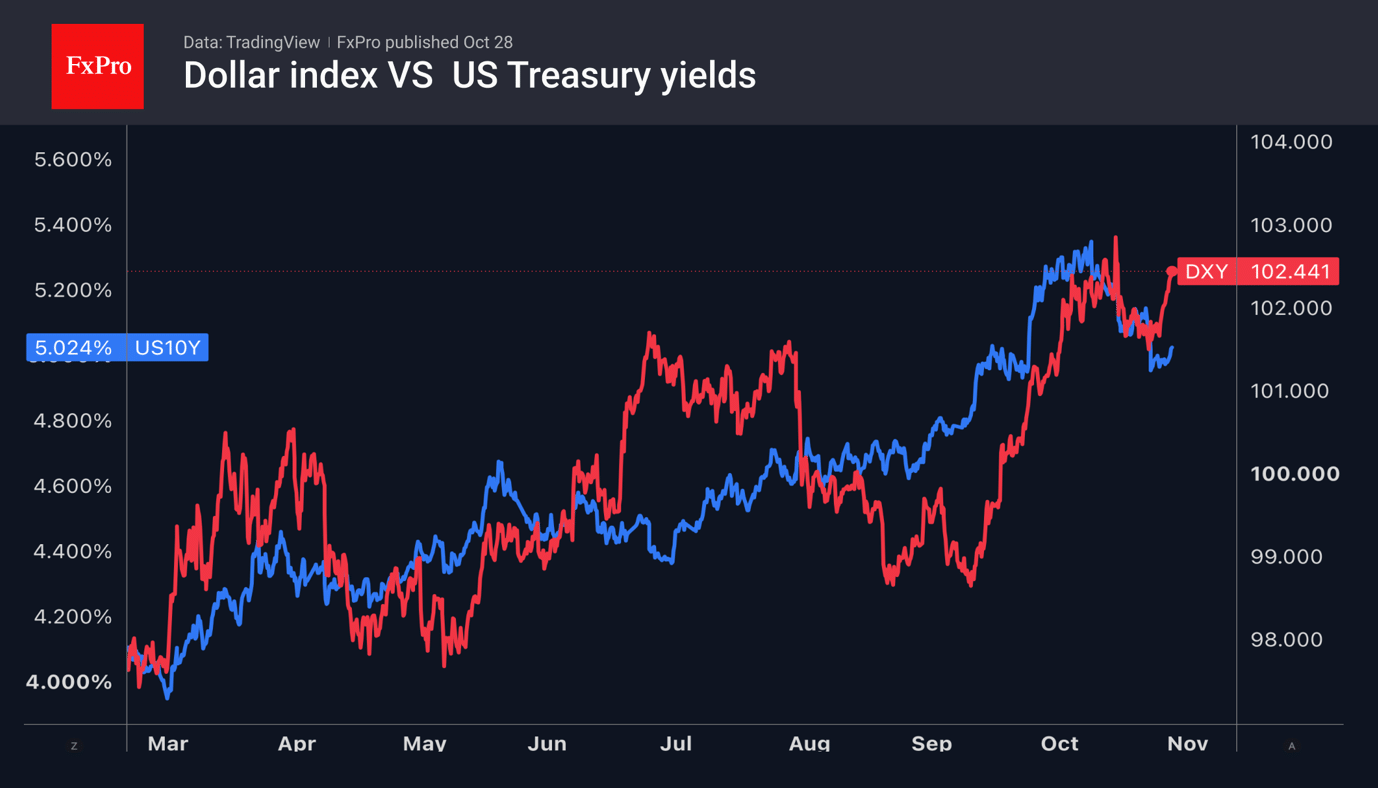
At the same time, according to CME interest rate derivatives pricing, expectations have become significantly more dovish over the past month, with the probability of an October hike revised down from 70% to 10%. Yet even under these conditions, the Nasdaq-100 retreated by 7.5% from its peak before finding support, while the DXY remains near its 18-month highs. Two consecutive rate hikes would exert significantly greater pressure on markets; however, the current situation is not comparable to 2022, when CPI soared above 9%, as inflation is now in the 3–4% range.
Brent surged towards six-month highs amid continued tight oil supplies from the Middle East and fears of escalation. Earlier this year, China demonstrated a remarkable ability to cut imports in the spring and summer; Europe delayed the start of gas storage for the winter for as long as possible; and the US drew down its strategic reserve at a record pace. The resolve of major countries managed to reverse the price trend despite the supply shortfall, which was a surprising outcome. But by autumn, their influence had begun to wane, and reports emerged of increased tanker bookings by China.
Investors are now seriously concerned that hostilities in the region will resume following next week’s midterm elections. The longer North Sea crude remains at elevated levels, the greater the likelihood that energy prices will feed through into core inflation, and the more aggressive the Fed’s response will need to be.
The base-case scenario, with signals that the Fed is prepared to raise rates in December and on several further occasions next year, provides a tailwind for EURUSD bears. The Fed is likely to move more swiftly along the path of monetary tightening than the ECB. At the very least, the economy allows for this. For the European Central Bank, the constraints are the French budgetary and political crisis and the slowdown in the eurozone economy linked to high energy prices.
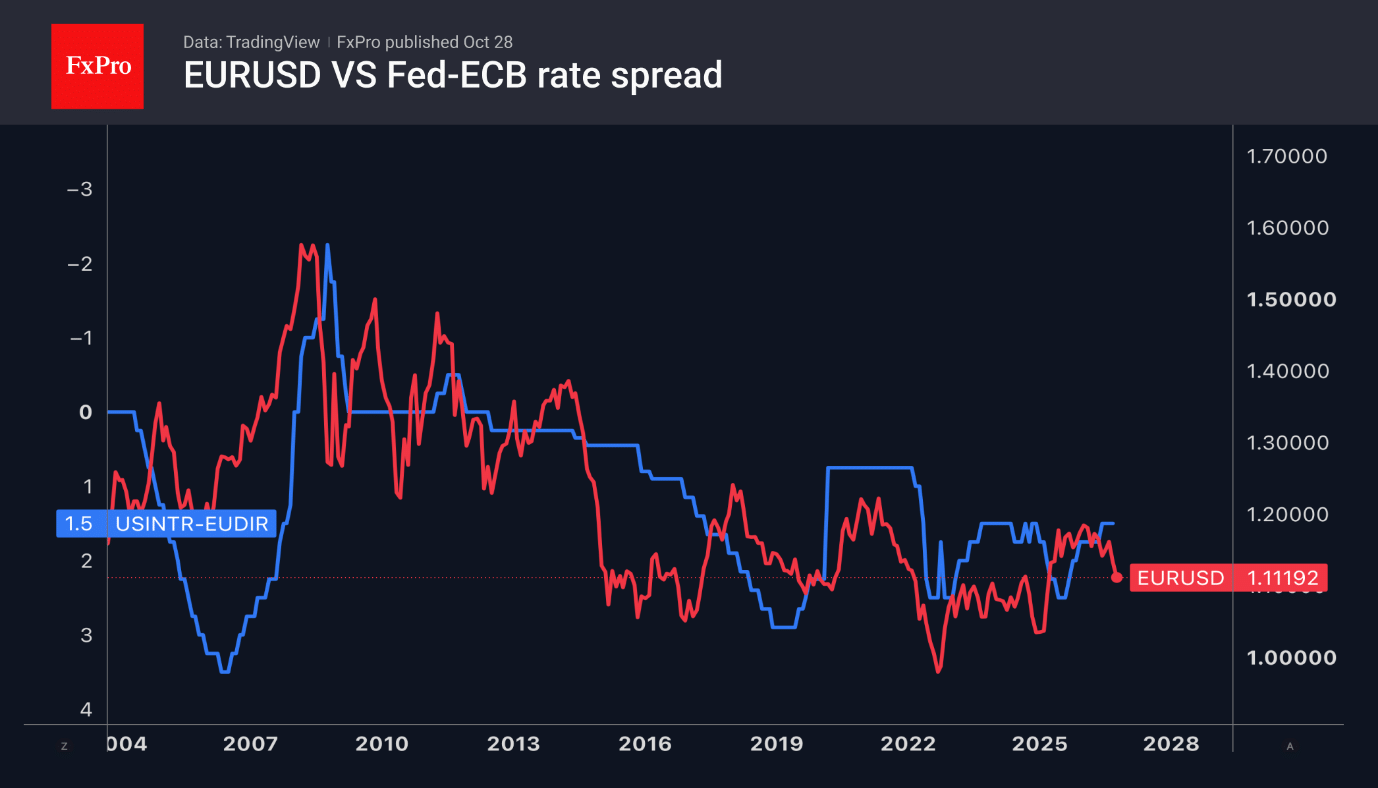
The eurozone risks facing stagflation sooner than the US. This will tie the hands of Christine Lagarde and her colleagues. It is no coincidence that she has been repeating Fed Chair Kevin Warsh’s mantra that the debt market can do some of the ECB’s work for it.
The FxPro Analyst Team