- The crypto market capitalisation has fallen below $2.40T and its 200-day moving average.
- Bitcoin has dropped below $72K; the nearest strong support is $63–66K.
- Ethereum has fallen below $2,000, with the next support levels at $1,850 and $1,550.
Market Overview
The crypto market capitalisation has fallen to fresh lows since mid-August, below $2.40T, due to a combination of negative factors, ranging from a strengthening US dollar to a sell-off in big tech stocks triggered by NVIDIA. The cryptocurrency market began its decline around five weeks ago and has maintained a surprisingly steady pace of decline for most of that time. Market capitalisation has now fallen below the 200-day moving average and continues to trend lower. This key line has failed to offer the market any meaningful support, raising the question of whether we might see an acceleration in the sell-off. None of the most liquid coins has risen over the past 24 hours, with declines ranging from -0.2% (Internet Computer) and -0.3% (Tron) to -8% (Aave) and -9.1% (NEAR).

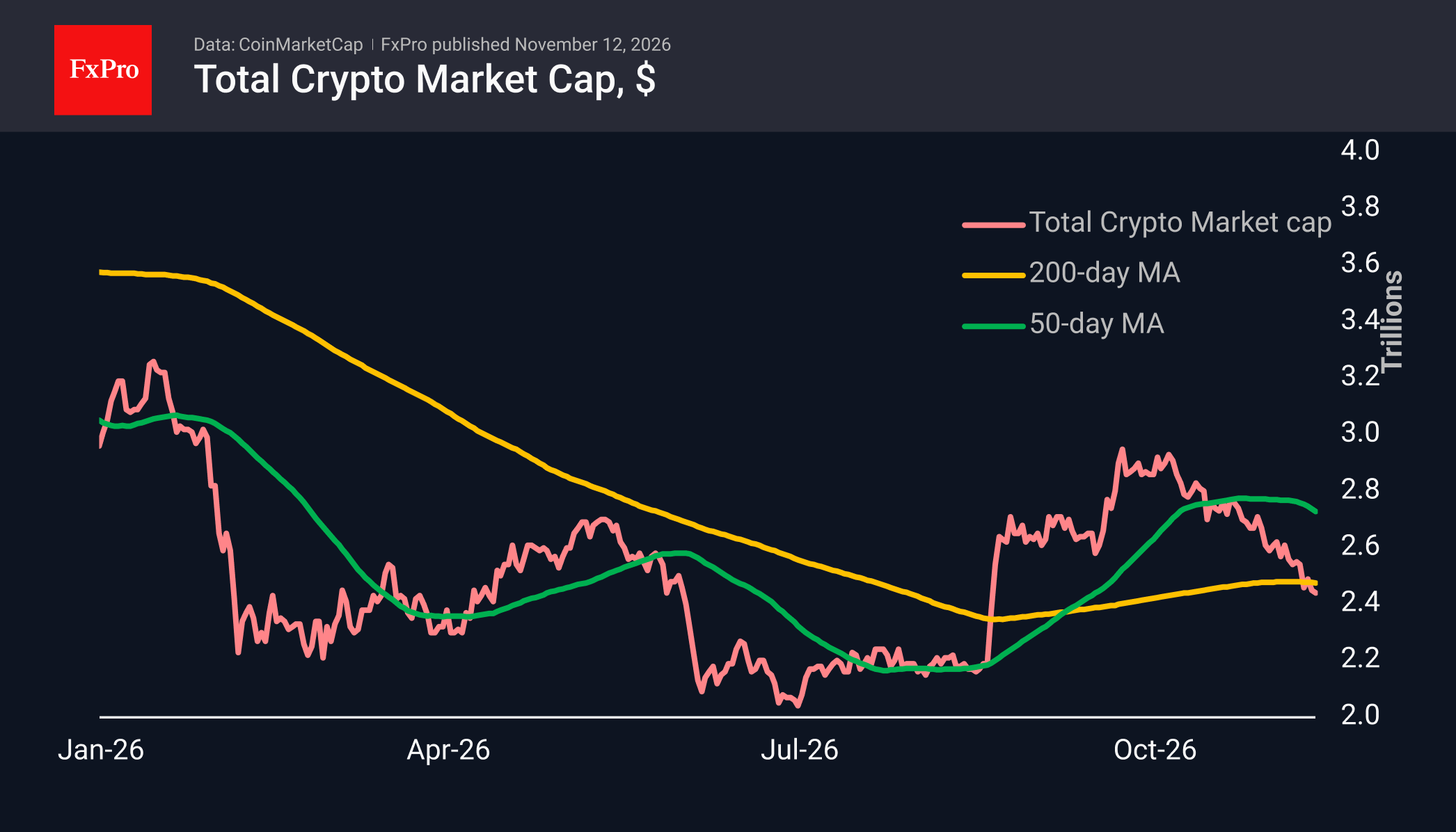
Source: CoinMarketCap, as of 12 November 2026.
Bitcoin fell below $72K by 13:50 GMT, at the start of US trading. It is easy to link this move to NVIDIA‘s struggles, with its shares losing over 10% in the last 24 hours. However, this would be a stretch given that the Nasdaq-100 and S&P 500 are rising. In this case, the short-term trend is largely influenced by the breach of the 200-day moving average. Unlike the wider market, there have been clear attempts by the bulls to hold above this line over the last four days, but intraday selling has been starting from increasingly lower levels. It appears that sellers have stumbled upon a cluster of stop-loss orders, and their triggering could become a self-perpetuating factor in the coming hours. This may sound overly pessimistic, but the next significant support zone is $63–66K, which is a considerable distance from current levels.

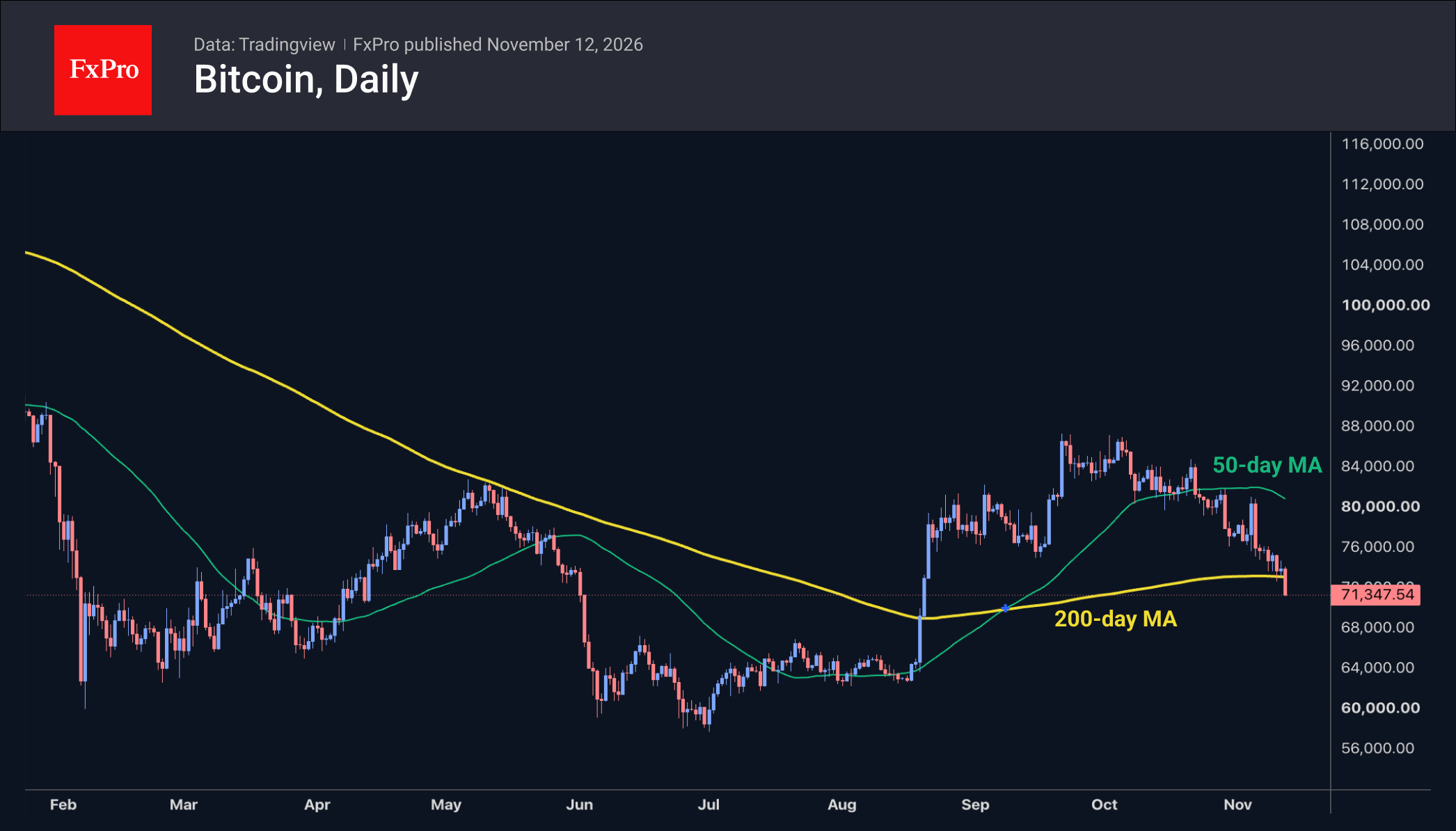
Source: TradingView, as of 12 November 2026.
Ethereum has fallen below $2,000, confirming its status as the canary in the coal mine for cryptocurrencies. Having fallen below this key round figure, ETH has erased almost all the gains from its August rally. Interestingly, that rally itself was linked to a softening in the tone of monetary policy, and now we are seeing a reversal as the odds of a 50 bp Fed hike in December have emerged. Among Ethereum’s nearest support levels, we are focusing on the $1,850 region, while the next, stronger horizontal level is the region around $1,550, near which lie the lows of both this year and last.
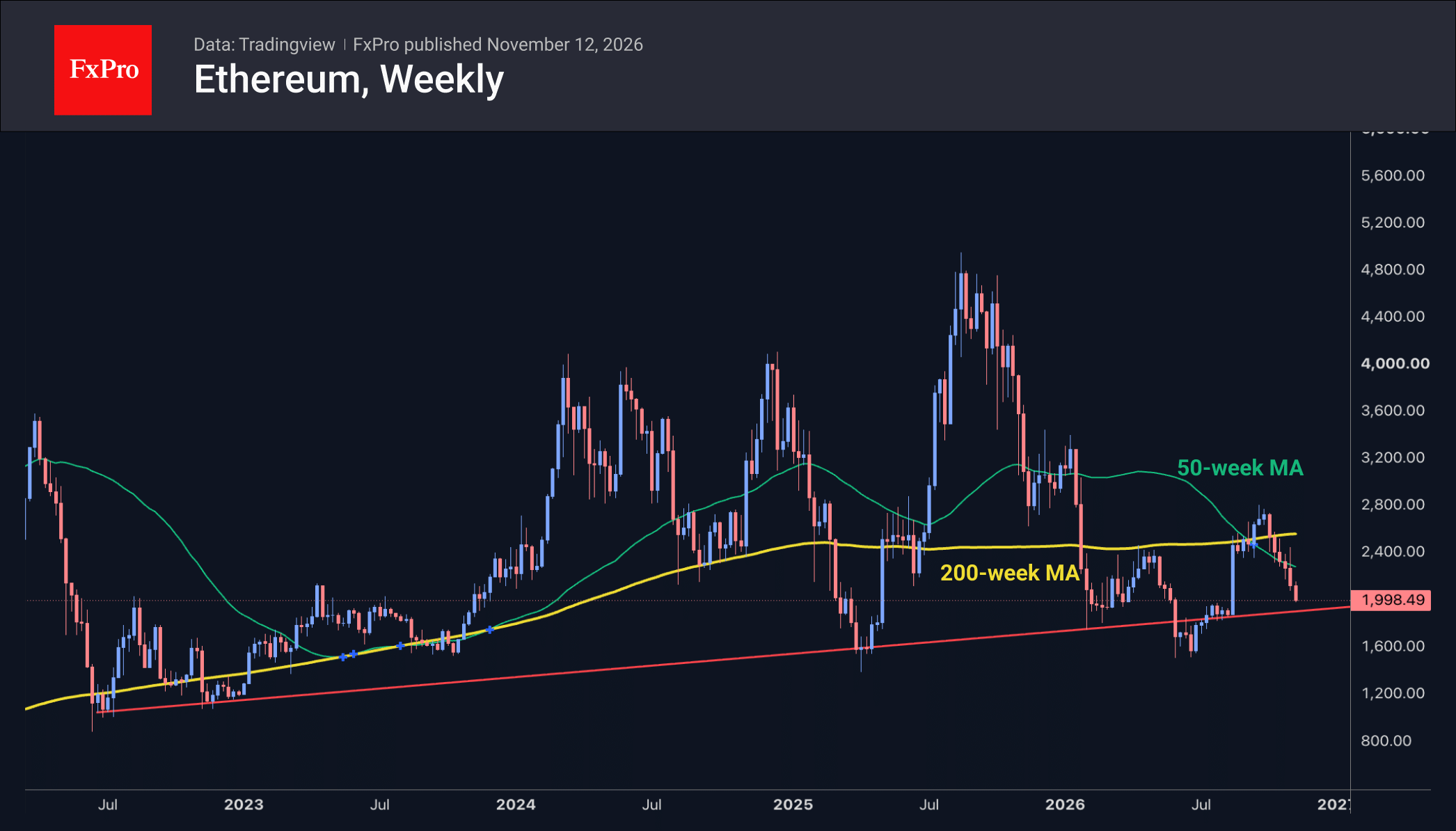
Source: TradingView, as of 12 November 2026.
News Background
Liquidity in the crypto market is shrinking, which may indicate weaker buying activity. According to CryptoQuant, the market capitalisation of Tether’s USDT stablecoin has fallen by $6.6 billion over the past 60 days. This is more than double the decline recorded following the FTX collapse in 2022.
Digital asset treasury (DAT) firms, public companies that hold crypto on their balance sheets, have begun to give in and sell Bitcoin from their reserves. The ratio of their purchases to sales has fallen below 90%. This has only happened three times before, and each time proved to be a good moment to buy, as Capriole Investments points out.
According to Validator Queue, the exit queue for Ethereum staking has fallen by more than 85% since October. Growth in new staking demand has slowed, while the increase in loans secured against ETH is heightening the risk of liquidations.
Bitmine reported a paper loss of $6.3 billion for the financial year ending 31 August. The main reason was the decline in Ethereum’s price. Meanwhile, the unrealised loss from the revaluation of reserves was 51 times larger than staking income.
A consortium of 21 major banks, including Goldman Sachs, Citigroup and Bank of America, has committed to providing $270 million to fund a future joint stablecoin issuer. The launch product will be a dollar-pegged stablecoin, scheduled for the first half of 2027.
What to watch
Invalidation: a rise in Bitcoin above $75K would take the price back above the latest local high, a round level and the September low.
Risk: triggered stop-loss orders could accelerate Bitcoin’s fall towards the $63–66K support zone.
Upcoming: US producer prices for October on 13 November at 13:30 GMT, which matter for expectations of a 50 bp Fed hike. Check the economic calendar for more events.
The FxPro Analyst Team